Every week brings a new AI agent platform promising to handle customer support, scheduling, or sales outreach. For a business making its first serious investment in this space, the harder problem isn't finding a vendor it's avoiding one that leaves the business stuck a year later, with data trapped in a system it's already outgrown.
The adoption reality behind the hype
It's worth knowing where most businesses actually land before picking a vendor: only 8% of businesses globally reach an "advanced" stage of AI adoption, with the large majority stuck running one or two isolated use cases without a coherent strategy connecting them, according to SMB Group research reported by Forbes. Separately, 51% of small business owners describe themselves as "AI explorers" testing tools without full commitment. That's not necessarily a bad place to be; it just means the vendor evaluation process matters more than the marketing suggests, because most businesses are choosing a starting point, not a final system.
Ask about data portability first
Before comparing pricing or features, ask how easily conversation history, customer data, and configurations can be exported if the business switches providers later. A vendor that can't answer this clearly, or answers evasively, is telling you something important about how the relationship is structured. This question matters more than it might seem: SMB adoption of AI is happening faster than large-enterprise adoption right now, which means the vendor landscape itself is still consolidating some of today's platforms won't exist in their current form in three years.
Pilot on a narrow, measurable workflow
Resist the temptation to roll a new agent out across an entire support inbox on day one. Pick one workflow with a clear before-and-after metric average response time, booking completion rate, resolution rate and run it for a month before expanding. This mirrors what's actually working elsewhere: the small businesses adopting AI successfully are consistently the ones anchoring the rollout to one well-defined process rather than attempting a full-operation switch at once.
Read the escalation logic, not just the demo
Demos are built to impress under ideal conditions. What matters more is how the agent behaves when it doesn't know the answer does it guess, stall, or hand off cleanly to a human? That failure mode is what customers will actually experience, and it's rarely shown in a sales demo. Ask specifically to see this behavior, not just the happy path.
Factor in the local talent gap
Nine out of ten African businesses report a shortage of in-house AI expertise, according to SAP Africa's 2025 research which means for most Nigerian SMEs, the vendor relationship itself often functions as the missing expertise. That raises the bar for what "support" needs to mean in a contract: is there a real person to call when a configuration breaks, or only a chatbot answering questions about the chatbot?
A short evaluation checklist
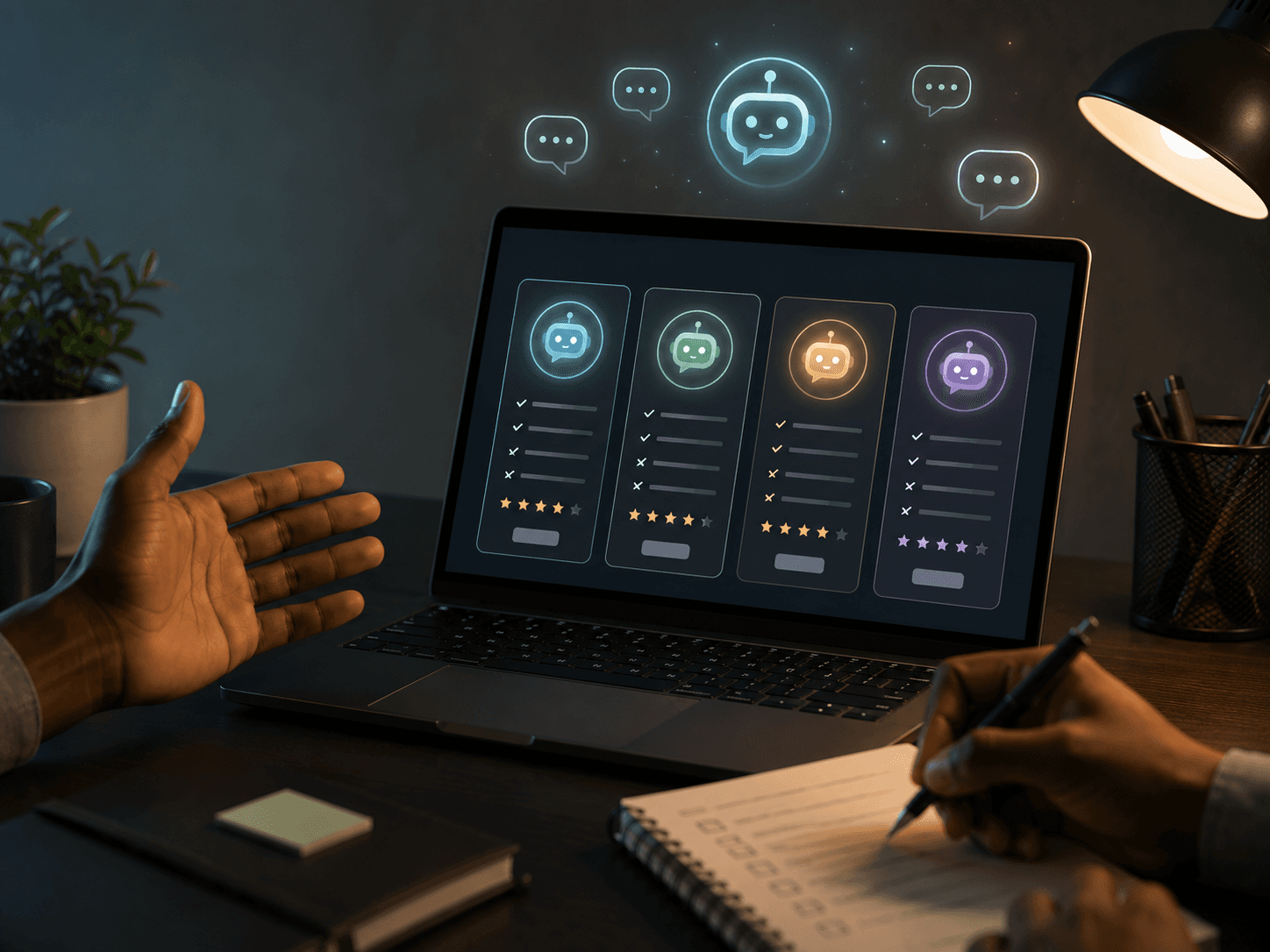
Before signing anything: confirm data export is straightforward and documented; pilot on one workflow with a defined metric for a fixed trial period; test the escalation/failure path directly rather than trusting the demo; and confirm what support actually looks like once the trial ends. None of this eliminates risk entirely every vendor choice carries some but it substantially reduces the odds of ending up locked into a system that's stopped serving the business a year in.