
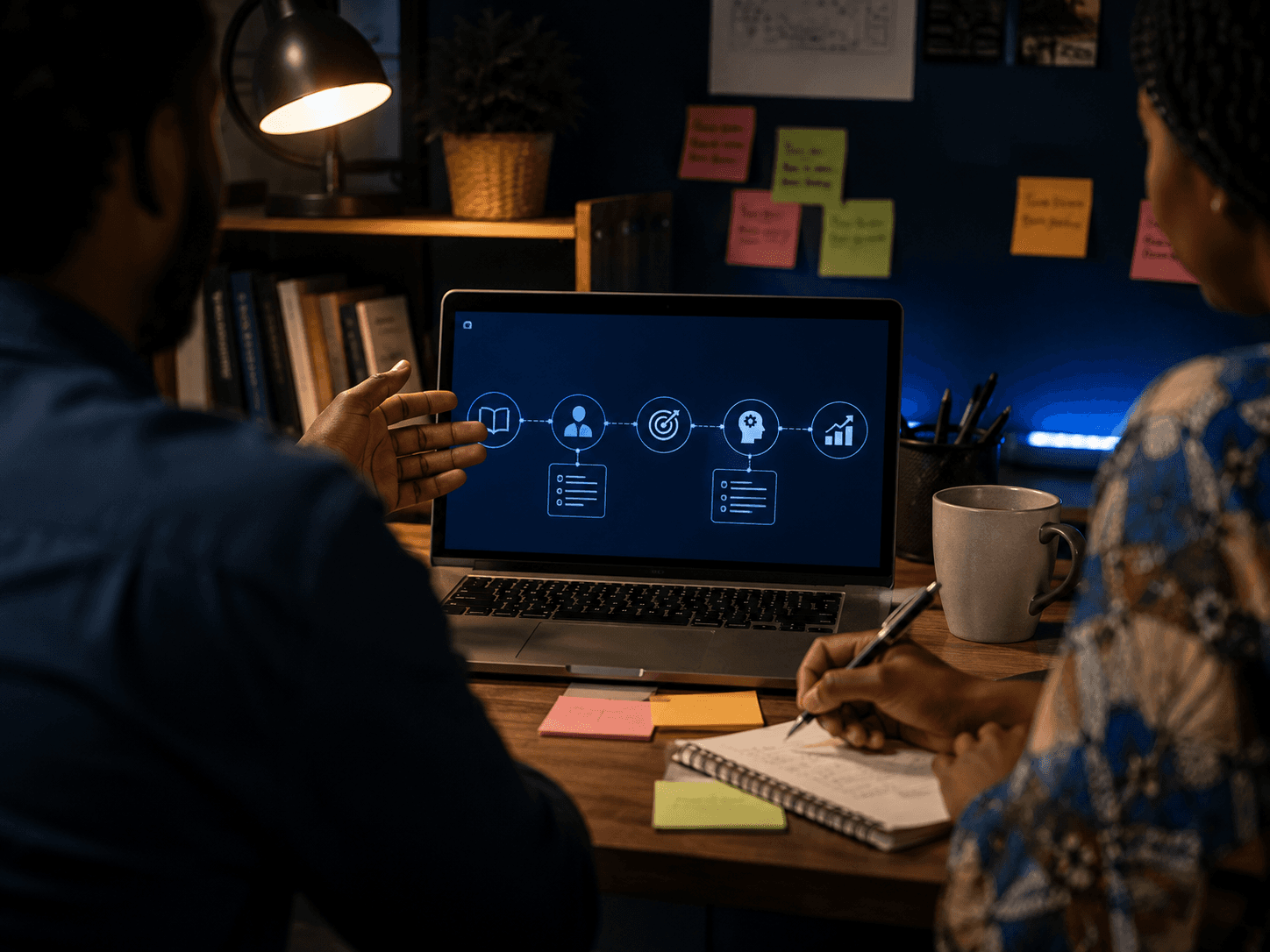
The most consistent complaint we hear from growing teams isn't a lack of training budget it's that formal, generic training rarely transfers into the specific tools and workflows the team actually uses day to day. Internal mentorship solves a different problem than a course does, and the data on why it works is fairly direct.
What the retention data actually shows
Organizations with strong, structured onboarding which reliably includes a mentorship or pairing component report up to 82% higher new-hire retention, according to Brandon Hall Group research widely cited across 2025-2026 workforce studies. The mechanism is straightforward: employees who go through comprehensive onboarding, including direct mentorship, are reported to be up to 18 times more committed to their employer after one year compared to those who receive minimal onboarding, based on 2026 onboarding research. Nearly 30% of new hires leave within their first 90 days specifically citing poor onboarding as a factor and mentorship is consistently one of the first things cut when onboarding gets rushed.
Pair, don't lecture
A senior team member spending 30 focused minutes a week reviewing a junior colleague's actual work produces more durable improvement than a quarterly workshop, because the feedback is tied directly to real output rather than a hypothetical scenario. This is a lower-cost intervention than it sounds it requires time, not budget and it's the single most repeated recommendation across workforce development research for why some companies retain technical talent better than others in the same market.
Make mentorship visible, not informal
Ad hoc mentoring quietly falls apart the moment things get busy, which in a small business is most of the time. Scheduling it as a recurring calendar block, with a light log of what was covered, keeps it from being the first thing dropped during a deadline crunch. This structure matters more than the content of any individual session a mentorship program that happens reliably every week, even briefly, consistently outperforms a more ambitious one that happens sporadically.
Rotate mentors periodically
Pairing the same two people indefinitely narrows the range of what gets taught, since every mentor has blind spots shaped by their own experience. Rotating mentors every few months exposes each team member to different approaches and prevents any one person's gaps from silently becoming the whole team's gaps. This also builds redundancy if a senior team member leaves, their specific knowledge isn't concentrated in only one junior colleague.
The retention math, applied to a small team
Replacing an employee costs on average 33.3% of their base salary once recruiting, onboarding, and lost productivity are accounted for, according to 2024-2025 workforce research. For a team of six or seven people, even preventing one avoidable departure a year through a low-cost mentorship structure typically pays for the time investment several times over without requiring any external training vendor, course subscription, or new hire at all.
What this looks like in a small business
In practice, this rarely needs to be more elaborate than: a recurring 30-minute weekly slot on the calendar, a shared document logging what's been covered so knowledge isn't lost if someone leaves, and a rotation every quarter so the same pairing doesn't calcify. The structure is what makes it durable the content will naturally follow whatever the team actually needs that month.