It's tempting to treat an Instagram page or WhatsApp Business profile as a full storefront. Nigeria's digital numbers make it easy to see why: the country had 109 million internet users by the end of 2025, putting online penetration at 45.5% of the population, and social commerce transaction value is projected to nearly double from $2.04 billion in 2025 to $3.96 billion by 2030, according to Mordor Intelligence's e-commerce market analysis. Mobile now accounts for more than four-fifths of all online orders in the country. On the surface, that looks like a case for skipping a website entirely and living on social platforms.
But visibility and credibility are different things, and the data on consumer behavior draws that line clearly.
What a website does that a profile can't
A domain you own, a clear description of what you actually do, and a way to be found on Google when someone searches your business name rather than stumbles on a post none of that depends on an algorithm's mood that day, or on a platform's terms of service. This matters more than it sounds: research from Safari Digital found that 62% of consumers will disregard a business entirely if they cannot find it online outside of social media, and BrightLocal's 2025 Consumer Review Survey found that 87% of people use Google to evaluate a local business even after being personally recommended it by a friend. Word of mouth starts the journey; a search result closes it and if there's nothing to find, the trail goes cold.
It doesn't need to be expensive
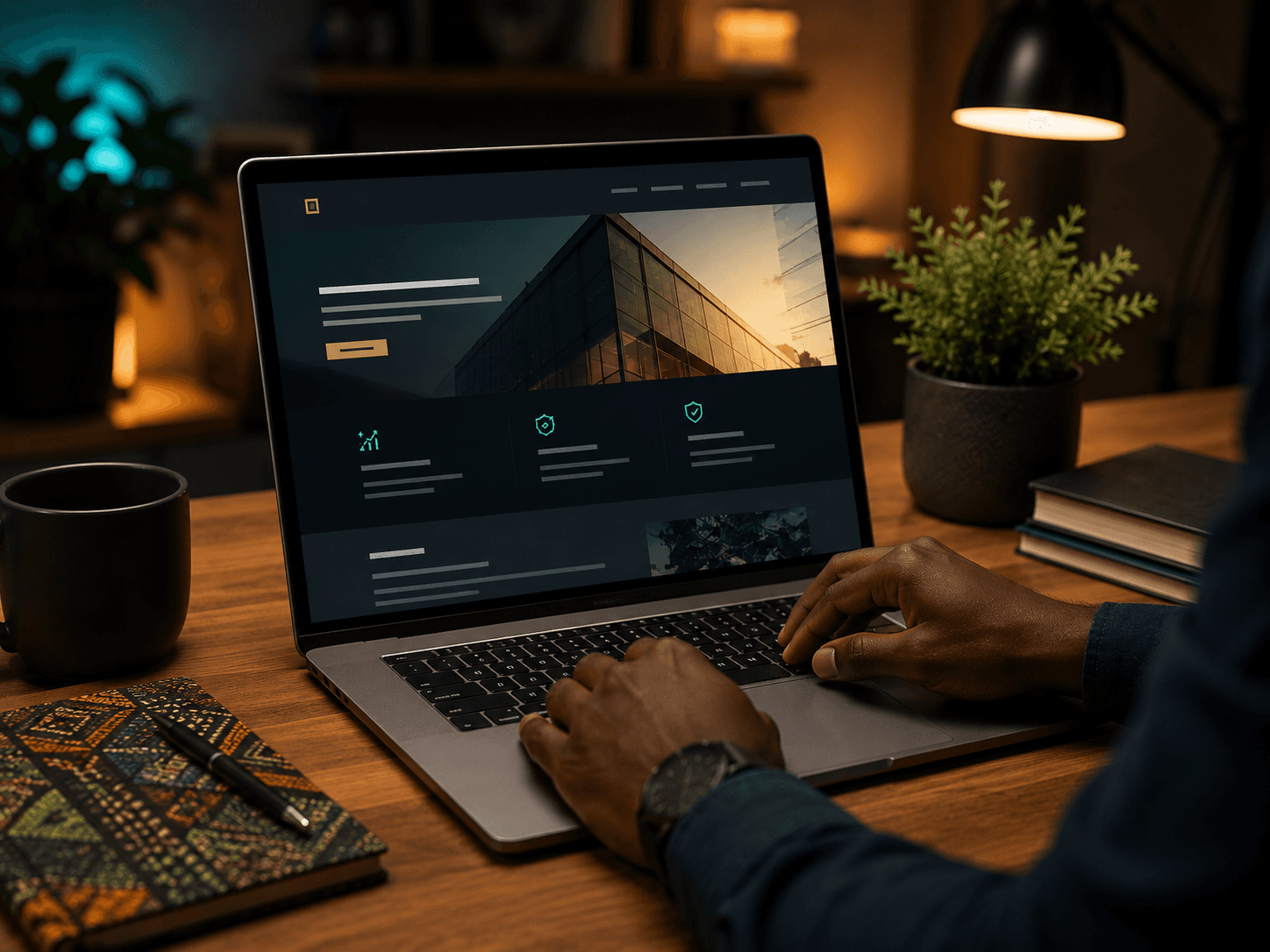
A focused five-page site with clear service pages, real contact information, and decent load speed outperforms a bloated template every time, for a fraction of what most founders expect to pay. Nigeria's e-commerce market itself is forecast to grow from $9.35 billion in 2025 to $18.68 billion by 2031 a 12.23% compound annual growth rate, per Mordor Intelligence and a growing share of that spending is happening through digital wallets and instalment payments (BNPL volume alone is projected to exceed $1.78 billion in 2026). A website is what lets a business plug into that infrastructure directly, rather than routing every transaction through a third-party platform that takes a cut and controls the customer relationship.
The trust signal matters more than the traffic
Even customers who found a business on Instagram will often check for a website before paying anything meaningful, particularly for higher-ticket services. Its job isn't always to generate traffic on its own it's to confirm, at the exact moment someone is deciding whether to trust the business, that it's a real, established operation and not a page that could vanish tomorrow. That confirmation role becomes more important, not less, as social commerce grows and scam awareness rises alongside it; cash-on-delivery still dominates in "trust-deficit" segments of the Nigerian market precisely because digital trust hasn't caught up everywhere yet.
What this looks like in practice
For a startup weighing where to spend limited resources first: keep building the social presence, since that's genuinely where discovery happens and where the growth numbers are strongest. But treat a simple website clear services, real contact details, a domain email address, and basic SEO as the credibility layer underneath it, not an optional add-on for later. The two aren't competing priorities; they answer different questions in the customer's decision process, and a business that only answers one of them is leaving the other half of the sale on the table.